The engine
Every rupee is spoken for before it is spent.
The month
Available is not assigned minus activity.
It is what the category has, carried forward from every month before this one. A category you underfunded in July starts August behind, and a fund you have been feeding starts it ahead. That is the single most important behaviour on the screen, and the one a spreadsheet almost never has.
When it goes wrong
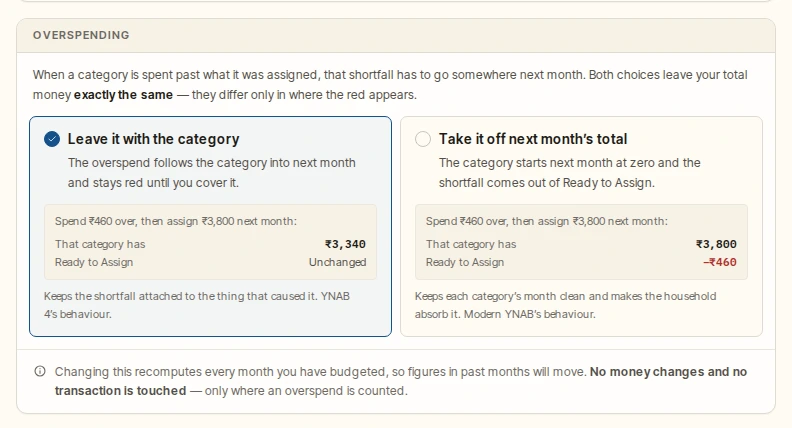
Overspending is a decision, so you make it.
Dining Out is ₹1,240 over. Two things can happen next.
The ledger
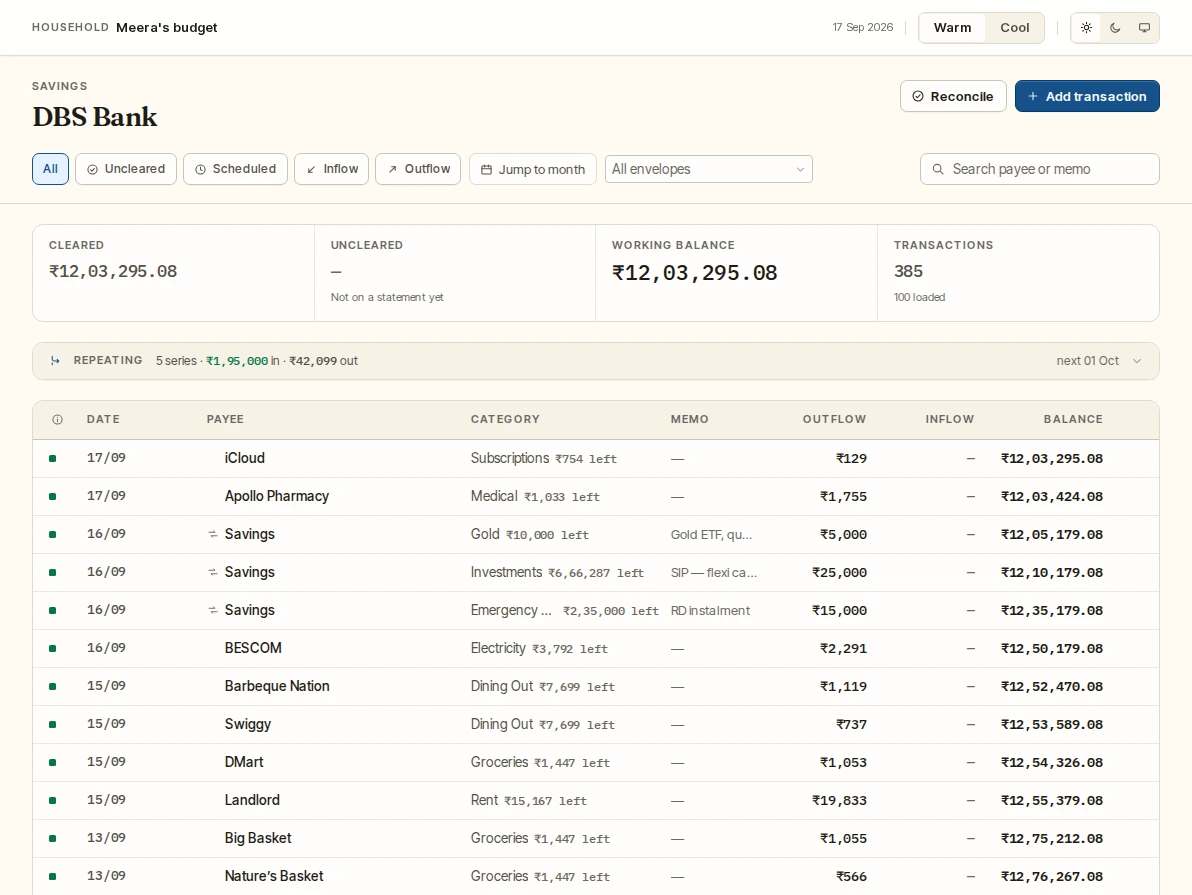
Entry is manual, and that is the feature.
Ahead does not connect to your bank. The people who type their transactions in are the people who notice where the money went, and an app that holds no bank logins has nothing on its side worth stealing.
So the register has to be quick, and it is. Type a payee and it completes, pick a category from a searchable list, and whether it is money in, money out or a transfer follows from what you typed.
Targets
Say what a category needs, once.
Monthly (“₹9,000 for groceries”) or by a date (“₹60,000 for the trip, by March”). One press works out what every short target needs this month and lays it out: what it has, what it gets, where it ends up. Nothing moves until you confirm.
When the money runs out, it fills categories in your budget’s order, top to bottom, so the things at the top come out whole. Untick anything you would rather leave this month, and its share goes on to the next one waiting.
Try it: untick Trip to Kerala and watch Diwali fill up.
Fund the targets
Here is where the money goes. Nothing moves until you confirm.
₹32,000
across 5 categories · 1 part-funded
Immediate obligations
3True expenses
2₹3,743 of this month’s targets stays unfunded. The money fills categories in budget order — top to bottom — so the ones at the top come out whole.
- Ready to Assign
- ₹32,000
- Being assigned
- − ₹32,000
- Left to assign
- ₹0
What the numbers say
Every report says what it left out.
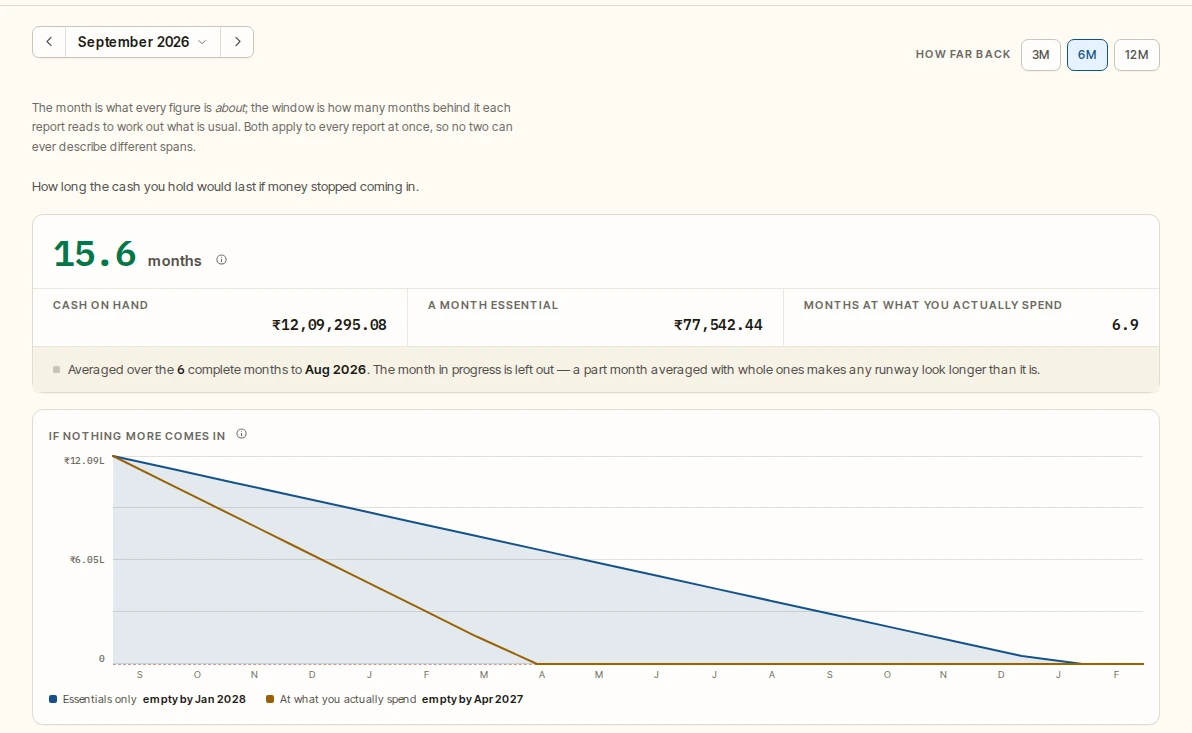
A report that gets a rule wrong does not look broken. It looks like an answer. So each one states the choice that made its figure, and none of them gives you a grade: they show the figures and leave the verdict to you.
How long what you hold would last if money stopped coming in.
Left out
An investment is not counted as cash, and a month still running is not averaged against whole ones.
Before you spend it
Write down what you nearly bought.
A wish sits on a list and cools. When its time is up you decide: buy it and link the receipt, or let it go.
The point is not the list. It is the running total of what you decided against — the only number in any budgeting app that goes up when you do the right thing.
Let go
₹55,900
2 wanted and not bought
Bought
₹6,500
1 after waiting
Still deciding
₹32,499
2 on the list
- ₹13,999
Kindle
Wanted 30 days
- ₹18,500
Office chair
12 of 30 days
- ₹31,000
Smartwatch
Let go after 45 days - ₹24,900
Noise-cancelling headphones
Let go after 30 days - ₹6,500
Mixer grinder
Bought after 30 days
Sixty days is two full months of budgeting.
Long enough to have a bad month and a good one, and to see whether the numbers still hold.
- No card
- Nothing starts charging when the trial ends.
- Nothing to connect
- No bank login, and nothing reads your SMS.
- Export whenever
- A zip of CSVs, paid or not.