Credit cards
A card bill should never be a surprise.
When you use the card
The money for the bill moves when you spend, not when you pay.
Diya buys ₹1,299 of books on her ICICI card. Two things happen in her budget at once:
So when the bill comes, the money for it is waiting in the card’s category. Paying it is a transfer from the bank to the card, and the budget does not move.
If Books & Courses only had ₹1,000 in it, it goes ₹299 red, and the card still has the whole ₹1,299 set aside. An overspend shows up where it happened, not as a hole in the card bill a month later.
The bill
What is due, by when, and what is not billed yet.
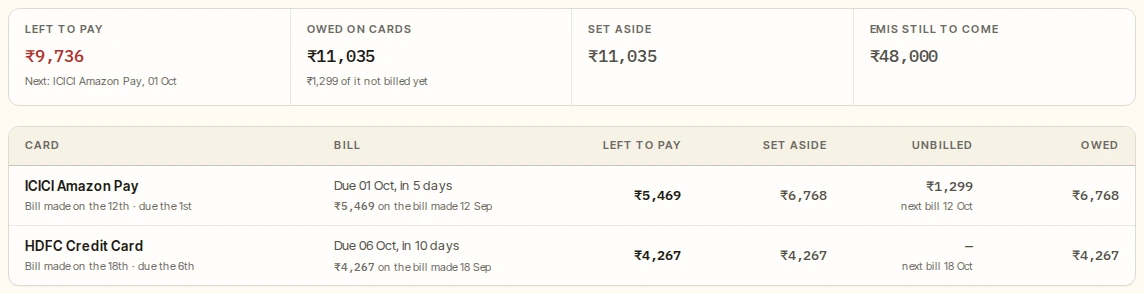
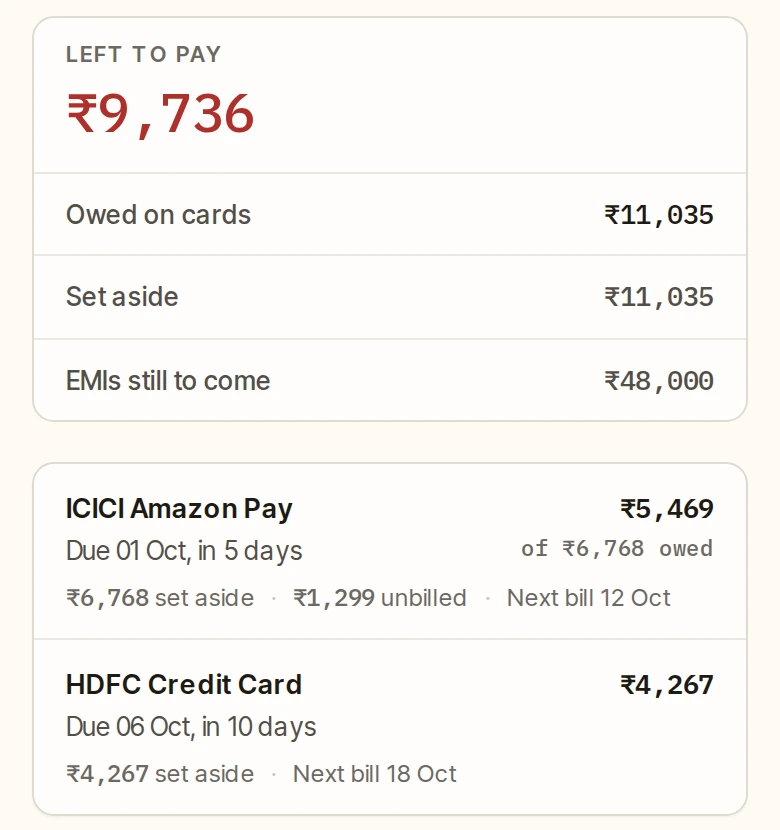
Give a card its bill day and its due day, and Ahead splits what you owe the way the bank does: what the last bill asked for, what you have paid since, what is left to pay, and what is waiting for the next bill. Left to pay and not billed yet always add up to what you owe.
It is worked out from what you have entered, and every screen says so. Your bank’s statement is the one that counts.
Before you buy
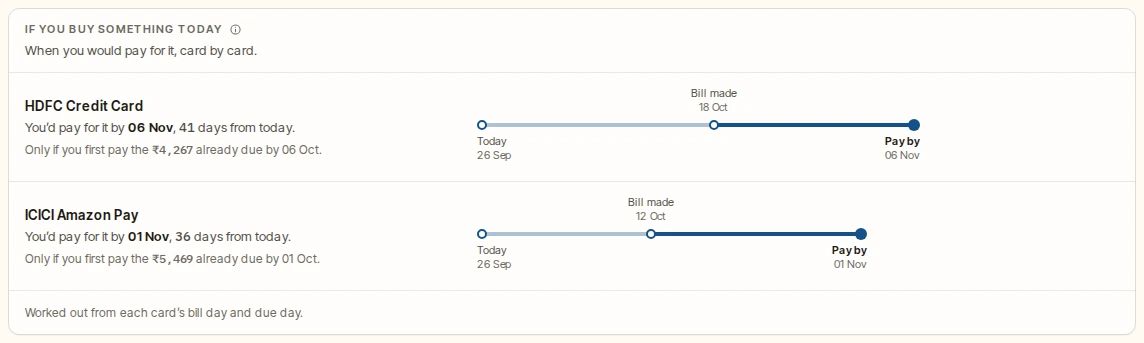
How long each card gives you to pay, from today.
A purchase is paid for on the due date of the bill it lands on, so the same thing bought on two cards on the same day can be due weeks apart. Ahead lists every card by how long you would have, longest first. It does not tell you which to use.
A card whose last bill was not paid in full gets no time at all. On most cards, interest then runs from the day you buy, and saying otherwise would be a promise the bank will not keep.
EMIs
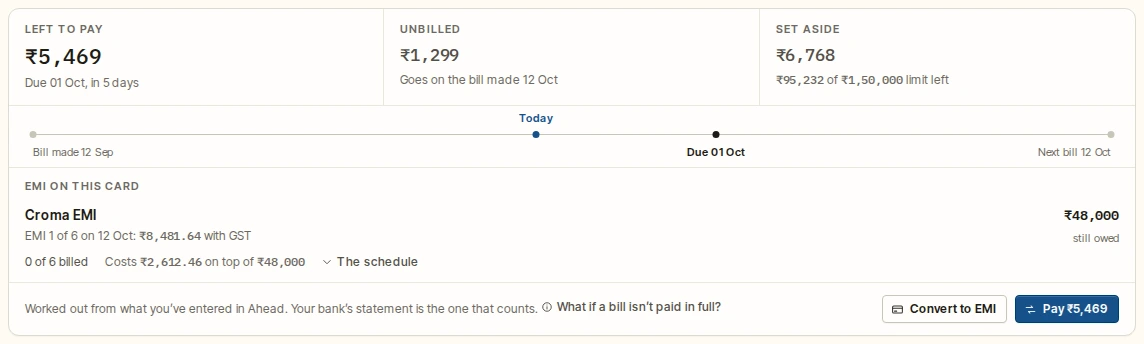
Convert to EMI records what your bank did.
When the bank turns a purchase into monthly instalments, tell Ahead what its SMS says: the months, and either the EMI or the rate. It works out the other, adds the GST, and shows what the EMI costs on top of the price before you save it.
The purchase’s category is whole again, and each instalment goes on that month’s bill. The budget asks for each one as it comes, rather than for the whole price at once. Ahead has no connection to your bank, so it records a conversion; it cannot make one.
If a bill isn't paid in full
What paying only the minimum costs.
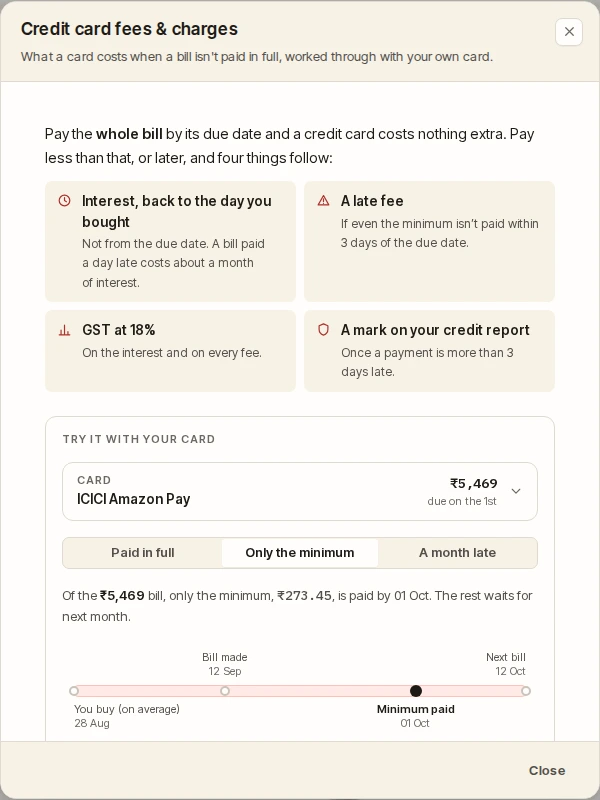
Interest runs from the day of each purchase, not from the due date, so a bill paid a day late costs about a month of interest. Paying the minimum avoids the late fee but not a rupee of the interest.
The fees and charges guide explains that once, then works it through with your own card’s bill: paid in full, only the minimum, or a month late. It uses a typical rate, 3.75% a month, and says so; your card’s real figures are in its Most Important Terms and Conditions.
Add your cards on day one.
The first bill Ahead works out is the next one your bank sends.
- No card
- Nothing starts charging when the trial ends.
- Nothing to connect
- No bank login, and nothing reads your SMS.
- Export whenever
- A zip of CSVs, paid or not.